
The collapse of Lehman Brothers in September 2008 became one of the defining financial disasters of modern history. Banks failed, markets crashed, and millions of people across the world lost jobs, homes, and savings. Nearly two decades later, economists, regulators, and financial veterans are once again watching warning signs flash across the global economy.
This time, however, the threat may not come from traditional banks or subprime mortgages. Instead, attention has shifted toward private credit funds, rising energy prices, inflated AI investments, and fragile global politics. While the financial system appears stronger on the surface, several experts believe the risks underneath are growing harder to track.
The next economic shock may not repeat the scenes of 2008 exactly. Yet many of the ingredients that fueled the last crisis are beginning to appear in new forms.
The Day Lehman Brothers Collapsed
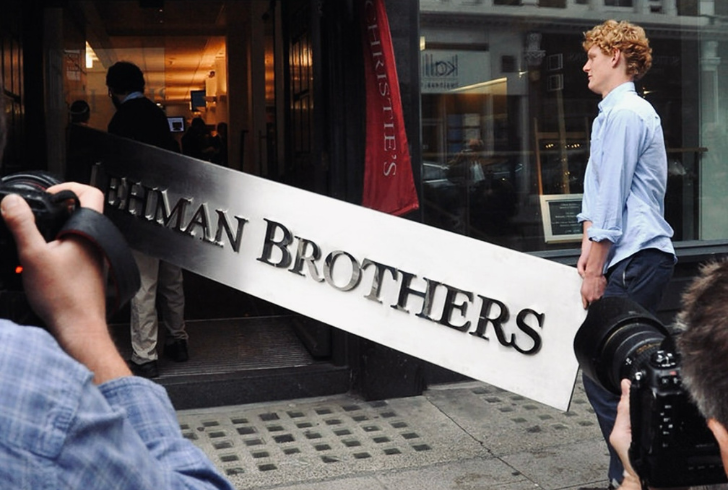
On September 15, 2008, former trader Bobby Seagull arrived at Lehman Brothers’ Canary Wharf office before 6 a.m., unaware that it would be his final day at the investment bank.
News had already spread that the American financial giant was filing for bankruptcy. Employees in London still reported to work as normal because communication from the United States had broken down.
Seagull later described the atmosphere as “chaos.” Phones stopped ringing, uncertainty spread across trading floors, and employees began removing office items amid fears that unpaid compensation would disappear overnight.
Sensing trouble ahead of time, Seagull had already prepared for the worst. He emptied a vending machine card worth £300 on chocolates after realizing the balance could become worthless if the company collapsed. He even bought a shopping trolley to carry belongings home.
That moment later became symbolic of the global financial crisis. Thousands of workers across the banking industry left offices carrying cardboard boxes while businesses failed around the world. The downturn triggered one of the deepest recessions since World War II.
Today, economists fear another financial disruption could emerge — although the source may look very different.
Private Credit Funds Are Raising Alarm Bells
One of the biggest concerns in today’s economy involves the rapid rise of private credit funds. These firms lend money outside the traditional banking system and have expanded aggressively over the past 15 years.
Major investment firms including BlackRock, Blackstone, Apollo Global Management, and Blue Owl Capital have recently faced pressure from investors trying to withdraw billions of dollars from private credit funds.
For regulators, the similarities to the years before 2008 are difficult to ignore.
Sarah Breeden, who oversees financial stability at the Bank of England, warned that the private credit market has expanded rapidly without experiencing a major financial downturn.
“Private credit has gone from nothing to two and a half trillion dollars in the last 15 to 20 years,” Breeden explained. “There is leverage, opacity, complexity, and interconnections with the rest of the financial system.”
Her concern centers on debt layered upon debt. Many private credit funds borrow money to finance loans, creating what Breeden described as “leverage on leverage on leverage.” If losses begin to spread, those layers could magnify the damage quickly.
The pattern resembles early signals seen before the 2008 crash, when risky mortgage investments began unraveling inside firms such as BNP Paribas
and Bear Stearns.
Back then, the panic spread because financial institutions stopped trusting one another. Banks feared they would never recover money loaned to other banks, triggering the credit crunch that eventually froze the global economy.
Mohammed El-Erian Warns Risks Are Underestimated
Mohammed El-Erian believes many investors are underestimating current financial vulnerabilities.
El-Erian, who previously led bond investment giant PIMCO, argues that the post-2008 regulations imposed on banks unintentionally created today’s private credit boom. As traditional banks became more cautious, alternative lenders rushed in to fill the gap.
“Too much money makes people make mistakes,” he warned.
According to El-Erian, problems could emerge if investors suddenly demand their money back at the same time. That pressure could force funds to sell assets quickly, creating instability across wider markets.
He described a scenario where a financial product that initially appeared beneficial eventually “pulls the rug out from under” the economy.
Not everyone agrees with those fears.
Larry Fink dismissed comparisons between today’s market and the 2008 crisis. Despite BlackRock limiting withdrawals from some private funds, Fink insisted modern financial institutions are significantly stronger than they were before Lehman Brothers collapsed.
“I don’t see any similarities at all,” he said. “Zero.”
Still, some analysts compare current investor behavior to a modern version of a bank run. Instead of people lining up outside bank branches like Northern Rock customers did in 2007, investors are attempting to withdraw money from large funds before conditions worsen.
Rising Oil Prices Add Another Layer of Risk
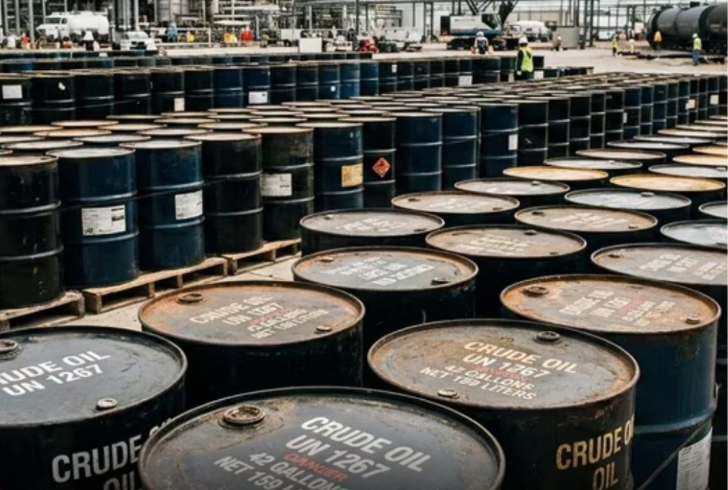
Energy markets are also adding pressure to the global economy.
Before the 2008 financial collapse, oil prices surged dramatically. Brent crude climbed from around $50 per barrel at the beginning of 2007 to $147 by July 2008. Growing demand from China and tensions involving Iran pushed prices higher, increasing costs across industries and squeezing consumers.
Today, oil prices have once again crossed $100 per barrel amid fears tied to the Strait of Hormuz, one of the world’s most important shipping routes for energy supplies.
The ongoing conflict involving Iran has raised concerns that disruption in the region could severely affect global oil transport.
Fatih Birol called the closure of the Strait of Hormuz “the greatest energy security crisis in history.”
Birol argued the situation could become more serious than the oil embargo of 1973, the Iranian Revolution in 1979, and the energy disruptions linked to Russia’s invasion of Ukraine in 2022 combined.
Even so, financial markets have not reacted with full panic. Stock indexes in the United States remain near record highs, suggesting investors still expect tensions to ease over time.
Breeden believes that optimism may not fully reflect current economic dangers. She warned that several risks could collide at once, creating a difficult environment for policymakers and markets.
AI Investments Could Become a Dangerous Bubble
Artificial intelligence has become another major source of concern.
More than $2 trillion has flowed into AI-related investments, creating intense excitement across Wall Street and Silicon Valley. Bill Gates recently described the race around AI spending as “a frenzy.”
The scale of concentration inside the stock market is striking. Roughly 37% of the value of the S&P 500 is now tied to just seven companies, including Microsoft, NVIDIA, Amazon, and Alphabet.
That means millions of retirement accounts, pension funds, and index-tracking investments are heavily exposed to AI companies, whether investors realize it or not.
If confidence around AI profits weakens, markets could fall sharply.
Economists often compare the situation to the dot-com bubble that burst in the early 2000s. Between March 2000 and October 2002, the NASDAQ index lost nearly 80% of its value. Internet companies collapsed, layoffs spread across the technology sector, and the broader economy slipped into recession.
The concern today is not simply about stock prices. A major correction involving AI companies could damage consumer confidence, reduce corporate spending, and pressure retirement savings simultaneously.
Governments Have Fewer Tools Than Before
One major difference between 2008 and today involves the financial strength of governments themselves.
During the last crisis, governments spent enormous sums rescuing banks and stabilizing economies. Central banks also slashed interest rates in coordinated emergency actions.
Those rescue options may now be more limited.
In 2008, British government debt stood below 50% of national income. Today, it sits close to 100% after years of emergency spending linked to bank bailouts, the COVID-19 pandemic, and energy support measures following Russia’s invasion of Ukraine.
El-Erian compared the situation to “a fire brigade that has run out of water.”
The International Monetary Fund recently warned that governments have less “policy space” available to respond to another major downturn.
Interest rates also remain significantly higher than they were during much of the last decade, leaving central banks with fewer easy solutions if economies slow rapidly.
Global Cooperation Has Become More Difficult
International coordination helped prevent the 2008 collapse from turning into a full-scale depression.
World leaders gathered at emergency G20 meetings in Washington and London to organize rescue plans and stabilize markets. Former British Prime Minister Gordon Brown later argued that strong international cooperation prevented deeper economic devastation.
That level of unity appears harder to imagine today.
Relations between major powers have deteriorated due to trade disputes, the war in Europe, tensions between the United States and China, and disagreements involving NATO and global security policies.
The IMF recently noted that “international cooperation is weaker” than in previous crises.
That matters because financial panic often spreads globally within days. If countries hesitate to work together during a future emergency, market instability could intensify much faster.
Why Banks May Survive Better This Time
Despite growing concerns, several experts believe the banking system itself is far safer than it was in 2008.
After the financial crisis, regulators forced banks to hold larger reserves and reduce risky borrowing practices. Banks today generally maintain stronger balance sheets and higher capital levels.
Breeden believes those safeguards make a repeat of the banking collapse less likely.
El-Erian shares part of that view. He does not believe ordinary bank deposits or payment systems face the same dangers seen during the Lehman Brothers era.
Still, he warns that weaknesses elsewhere in the financial system could push economies into recession even if banks remain stable.
The impact would likely fall hardest on lower-income households and financially vulnerable communities, which historically suffer most during economic downturns.
Financial Markets Have Become More Complex
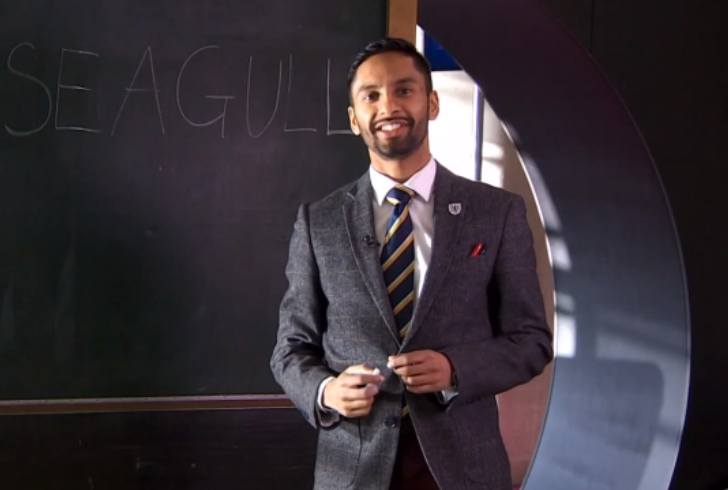
Years after leaving Lehman Brothers, Bobby Seagull now works as a math teacher. Yet he still believes financial markets remain difficult to fully understand.
Modern investments often involve complicated structures passed between institutions, funds, and investors. That complexity can hide risks until markets suddenly turn unstable.
Seagull compared the process to passing around a package without knowing exactly what is inside.
His warning reflects one of the biggest lessons from 2008: financial systems often appear stable right before pressure points begin breaking apart.
The next financial crisis may not start with failing banks or risky mortgages like it did in 2008. Today’s concerns center around private credit funds, inflated AI investments, rising energy prices, and growing geopolitical tensions.
While banks are financially stronger than they were during the Lehman Brothers collapse, economists still warn that rising debt, speculative investments, and global instability could pressure markets if multiple risks collide at the same time.
The biggest lesson from 2008 remains relevant: financial risks often grow quietly before they suddenly dominate headlines around the world.