
Canada is making a major shift in how it approaches defense spending. As relations with the United States become more strained, the country is putting more money into its own military supply chains and encouraging Canadian businesses to enter the defense market.
The change is already visible in factories, robotics labs, drone facilities, and aerospace projects across the country.
One example sits inside a garment factory in Toronto. Workers operate sewing machines to assemble camouflage fabric and Velcro strips, while others inspect finished helmet covers for the Canadian military. The products are being made for Wuxly, a luxury parka company that has expanded into defense-related manufacturing.
Wuxly is part of a growing group of Canadian companies moving into military work. Some businesses are developing Arctic sensors, while others are producing drones, autonomous robots, military clothing, and equipment designed for remote operations.
A Major Spending Shift
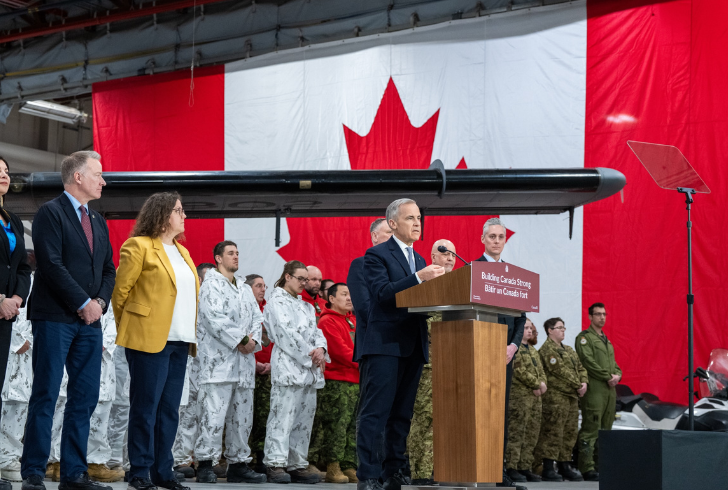
Prime Minister Mark Carney has placed greater economic independence at the center of Canada’s defense strategy. The move comes as Ottawa faces new tensions with Washington, including another round of U.S. tariffs.
Canada has traditionally relied heavily on American defense suppliers. That approach is now changing. Canadian startups, established manufacturers, and companies from allied countries are expected to compete for billions of dollars in new spending.
The country plans to add about $60 billion in defense funding over the next five years. Canada currently spends roughly $36 billion to $43 billion on national defense.
Philippe Lagassé, a Carleton University professor who specializes in defense policy, described the scale as significant for Canada, particularly during peacetime.
The change is also visible at industry events. Wuxly founder and CEO James Yurichuk said defense shows have been selling out, with new companies and businesses from other industries showing interest in military contracts.
For Canada, the increase represents more than a larger defense budget. It signals an effort to build a stronger domestic industrial base.
The Arctic Is a Major Focus
Canada’s enormous Arctic territory has become one of the main reasons behind the spending increase. The region is remote, difficult to operate in, and gaining strategic importance.
Carney has called for stronger Arctic capabilities as Canada seeks to protect its sovereignty in the North. That requires equipment capable of working in harsh conditions and across long distances.
Wuxly is already supplying military clothing and equipment designed for these environments. Its helmet covers allow soldiers to attach call-sign patches, lights, cameras, and beacons. The company also produces military parkas and tank covers.
Its work extends beyond Canada. Wuxly has supplied equipment to Ukraine’s military, including 40,000 uniforms designed for women.
Yurichuk said better clothing and equipment will become increasingly important as Canada increases its activity in the Arctic.
Canadian and European Firms Gain Ground
A central part of Canada’s strategy involves reducing its dependence on U.S. defense contractors. Ottawa wants Canadian businesses to take a larger role while also building relationships with European allies.
The government’s long-term plan calls for more than half a trillion dollars in investment, with an objective of creating 125,000 jobs and tripling the size of Canada’s defense industry over the next decade.
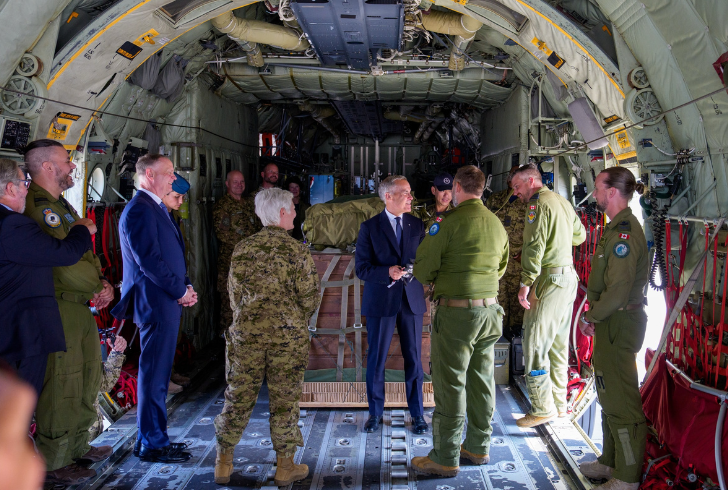
The strategy also places greater attention on research and development. Aerospace, robotics, and unmanned systems are among the areas identified as important “sovereign capabilities.”
Canada has already looked beyond the United States for major defense purchases. Ottawa announced plans this year to buy radar aircraft from Sweden’s Saab rather than American competitors. It has also pursued submarines from Germany’s ThyssenKrupp.
That broader supplier network could give Canadian companies more opportunities while reducing reliance on a single defense market.
Robots Could Support Arctic Operations
Small technology companies are also trying to secure a place in Canada’s growing defense sector.
New Frontier Robotics, a two-person company, is developing a mobile manipulator robot. The machine combines a robotic arm with a mobile platform and uses artificial intelligence to perform tasks with limited human intervention.
Co-founder Nikhil Malhotra said there is clearly money available for companies working in the sector.
The company originally targeted manufacturing. Its robots were designed to move independently between assembly lines. However, conversations with potential customers revealed military applications as well.
A robot could perform maintenance at isolated military facilities, particularly in the Arctic. Sending a machine into dangerous conditions could reduce the need to expose workers to extreme weather.
New Frontier Robotics is temporarily operating from a robotics laboratory at the University of Waterloo, about 60 miles (100 kilometers) west of Toronto.
The company’s approach also reflects a growing interest in dual-use technology. These products can serve civilian industries while also meeting military needs.
Drones Offer Another Opportunity
Volatus Aerospace, based near Montreal, is another Canadian company benefiting from the shift.
CEO Glen Lynch said defense was not previously a popular focus for a small-cap Canadian public company. He also pointed to Canada’s limited manufacturing capacity, both for drones and for manufacturing more broadly.
Volatus has built its business around dual-use drone technology. Its aircraft can support civilian operations, including delivering medical supplies to isolated communities. At the same time, the company operates a defense division.
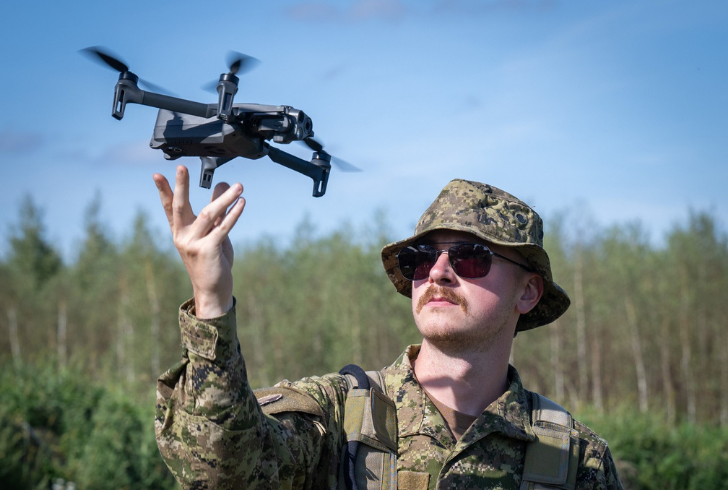
Its military-related work includes first-person-view drones designed to strike targets by crashing into them.
The company tests aircraft at a 100-acre site north of Toronto, reached by an unmarked gravel road and surrounded by farmland. During a demonstration, Volatus showed several types of aircraft.
One drone carried a 60-kilogram (132-pound) payload beneath it on a cable. Another aircraft used tilt-wing rotors and was designed to transport cargo over longer distances. The drones demonstrated autonomous flight by moving in a circular pattern before landing.
One model, called the Canary, has payload-bay doors and already has civilian uses. It can deliver medical supplies to remote Indigenous First Nations communities in Alberta.
According to Chief Operations Officer Greg Colacitti, similar technology could deliver resupply packages to soldiers and potentially transport munitions.
Challenges Remain
Canada’s defense expansion still faces several obstacles. Political changes could affect Carney’s spending plans, especially if opposition parties challenge the program during future elections.
There is also a risk that successful Canadian technology companies could move south to pursue the much larger U.S. defense market.
Canadian firms must also compete with American companies that have significantly larger research and development budgets. Lagassé noted that U.S. companies will often remain ahead in technological capability because of those resources.
That makes Canada’s domestic strategy important. Government contracts could give local companies the customer base needed to develop products, expand manufacturing, and compete internationally.
A New Role for Canadian Industry
Canada’s larger defense budget is creating new opportunities for companies working in areas such as robotics, drones, aerospace, and military equipment. Wuxly, New Frontier Robotics, and Volatus Aerospace illustrate how businesses outside traditional defense manufacturing are entering the sector.
The shift also reflects Canada’s effort to reduce its reliance on U.S. suppliers while strengthening its own industrial capabilities. With $60 billion in additional defense funding planned over five years, Ottawa is giving domestic companies more opportunities to participate in military supply chains.
Political uncertainty, competition from U.S. firms, and limited research funding remain challenges. Even so, the investment could give Canadian manufacturers and technology companies a stronger role in the country’s future defense system.